


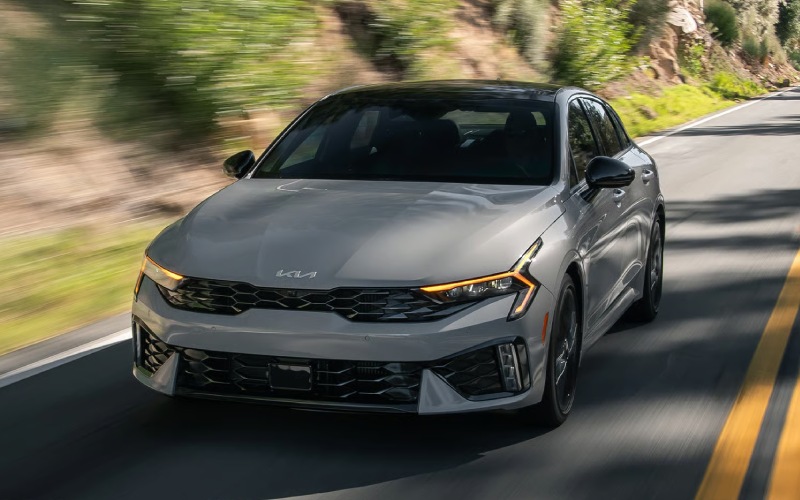
Team Kia of Bend - Which midsize sedan offers smarter safety and confidence for daily driving around Madras, OR: 2026 Kia K5 or 2026 Nissan Altima?
Shoppers often ask a straightforward question when comparing these two sedans: which one offers smarter safety and confidence for everyday commuting and weekend trips around Madras, OR? It is a fair question, because both models bring robust driver-assistance suites, available all-wheel drive, and helpful visibility tech. Yet a closer, structured look at the features, how they work, and what you feel behind the wheel reveals meaningful differences that can change how comfortable and confident you are on U.S. 97 or heading out toward Culver and beyond.
Let’s start with the fundamentals. Each model includes a standard safety suite that covers the most common needs—forward collision mitigation, blind-spot alerts, rear cross-traffic warnings, and lane support. The first divergence appears when you examine what each sedan adds to those basics. One brings standard forward collision mitigation that also looks for a left-turn conflict across traffic—Junction Turning Detection. It is a subtle but important layer because many drivers face protected and unprotected left turns during commutes and school pick-up routines. The other sedan focuses on early warnings of braking ahead via Intelligent Forward Collision Warning, which is valuable, but it does not address that left-turn scenario the same way.
Low-speed visibility and parking support
Parking garages and angled downtown street parking are where surround-view cameras earn their keep. Both sedans offer a 360-degree camera system, delivering an aerial view to help you negotiate tight spots and avoid curb rash. One goes a step further with a live Blind-Spot View Monitor that displays a camera feed of your rear blind spots in the instrument cluster when you signal a lane change. It is a brilliant implementation because you do not need to shift your gaze to a side monitor—the video appears right where your eyes naturally scan. The result is less guesswork when you are changing lanes near downtown or easing out of a busy grocery lot.
Beyond camera systems, sensor coverage matters. Front and rear parking sensors are invaluable in close quarters, and side parking sensors add even more awareness when you are threading past pillars or angled corners. If you park in tight spaces at work or in a shared garage at home, it’s worth prioritizing trims that include these side sensors and an available 360-degree view.
Highway assistance that reduces fatigue
Available highway assistance systems on both sedans pair lane centering with adaptive cruise control that can slow, stop, and start with traffic. The practical effect is a calmer, more predictable commute on long, straight stretches—especially useful for the daily flow around Redmond and Terrebonne. The difference is in how seamlessly the system integrates mapping, speed adjustments, and gentle steering to reduce your workload.
Some shoppers also ask about over-the-air updates. While not a safety feature per se, the ability to receive infotainment updates without a service visit helps ensure navigation, phone integration, and interface behavior stay current. That means fewer distractions from dated software or mismatched smartphone compatibility.
AWD confidence—what to consider
Available all-wheel drive on both sedans helps in variable traction, but the way torque is managed can vary. Systems that actively shift power front-to-rear quickly are excellent foundations; when paired with tuning that helps the car rotate predictably, you feel more secure during quick lane changes or when the pavement is slick with dust or cinders. If you regularly take pre-dawn drives or run late errands across town, prioritizing a sedan with a confident AWD calibration can add peace of mind without sacrificing fuel efficiency or refinement.
Of course, visibility and lighting are a big part of daily confidence. LED headlights standard across most trims deliver a crisp, even beam pattern, and features like auto high beams and signature LED taillights improve conspicuity. If you drive rural connectors after sunset, invest time in a night test-drive to judge headlight performance in real conditions.
Feature depth—what to look for on your test-drive
When you visit a showroom, come prepared with a checklist of features that matter to your routine. Pair that with a short loop that mimics what you face every day—merging onto a busy highway, navigating a roundabout, parallel parking on a side street, and cruising at steady speed. Capture how the sedan steers around-center, how naturally the lane-centering behaves, and how confidently the camera and sensor suite supports low-speed maneuvers.
- Junction Turning Detection: Does the forward collision system recognize a left-turn conflict across traffic, and does it warn or assist appropriately?
- Blind-Spot Visualization: Is there a live camera feed into the gauge cluster, or only a standard warning light/chime?
- Parking Sensor Coverage: Are there front, rear, and side sensors, and how clearly do they communicate distances?
- Highway Assistance Smoothness: Does the lane-centering stay steady without darting, and does adaptive cruise restart consistently in stop-and-go?
- All-Wheel Drive Behavior: How planted does the car feel during quick merges and lane changes when traction varies?
The cabin environment also plays a role in your overall sense of calm. Dual panoramic-style displays deliver map guidance and media in one continuous field of view, reducing head movement. Wireless Apple CarPlay® and Android Auto™ ensure instant phone integration without cable clutter, while a premium audio upgrade like Bose® can make long stretches pass comfortably. Small touches—heated steering wheel, ventilated front seats, and memory settings—sound simple, but they make a difference when you’re in and out of the car multiple times a day.
Putting it all together for Madras-area driving
In practical terms, the sedan that offers junction-aware braking assistance, a live blind-spot camera feed, comprehensive parking sensors, and composed highway assistance will feel more intuitive and more protective. Add a well-tuned AWD system and strong LED lighting, and you have the makings of a stress-reducing daily driver for errands, school runs, and commutes along the U.S. 97 corridor.
Frequently Asked Questions:
Do both sedans offer a 360-degree camera system?
Yes, both models offer a surround-view camera system that provides an overhead view to simplify parking and tight maneuvering.
What is the benefit of a Blind-Spot View Monitor with a live camera feed?
Instead of a simple indicator, a live video shows what’s in your rear blind spot right in the gauge cluster when you signal, reducing guesswork and making lane changes feel more natural.
Is junction-turning detection important?
If your daily routes include unprotected left turns, junction-turning detection adds an extra layer of awareness by recognizing oncoming traffic conflicts and assisting with timely alerts or braking when needed.
How should I test highway assistance features?
Drive a short loop with steady highway speeds, light curves, and brief stop-and-go. Pay attention to how confidently the system centers the car and how smoothly it brakes and accelerates with surrounding traffic.
When you are ready to compare trims and features side by side, visit Team Kia of Bend—serving Redmond, La Pine, and Madras—to align the right configuration with your daily driving. Our product specialists will walk you through feature demonstrations and set up a test-drive route that mirrors your routine so you can choose confidently.